Discovering the United States through its roadside attractions, museums, parks, cities, and towns.

Friday, September 15, 2017

Collectors' Corner Museum Is a True Hidden Gem

The Blue Charley Chronicles has moved! Please visit the new site at The Blue Charley Chronicles – Roadside attractions, small towns, museums, and more from the USA

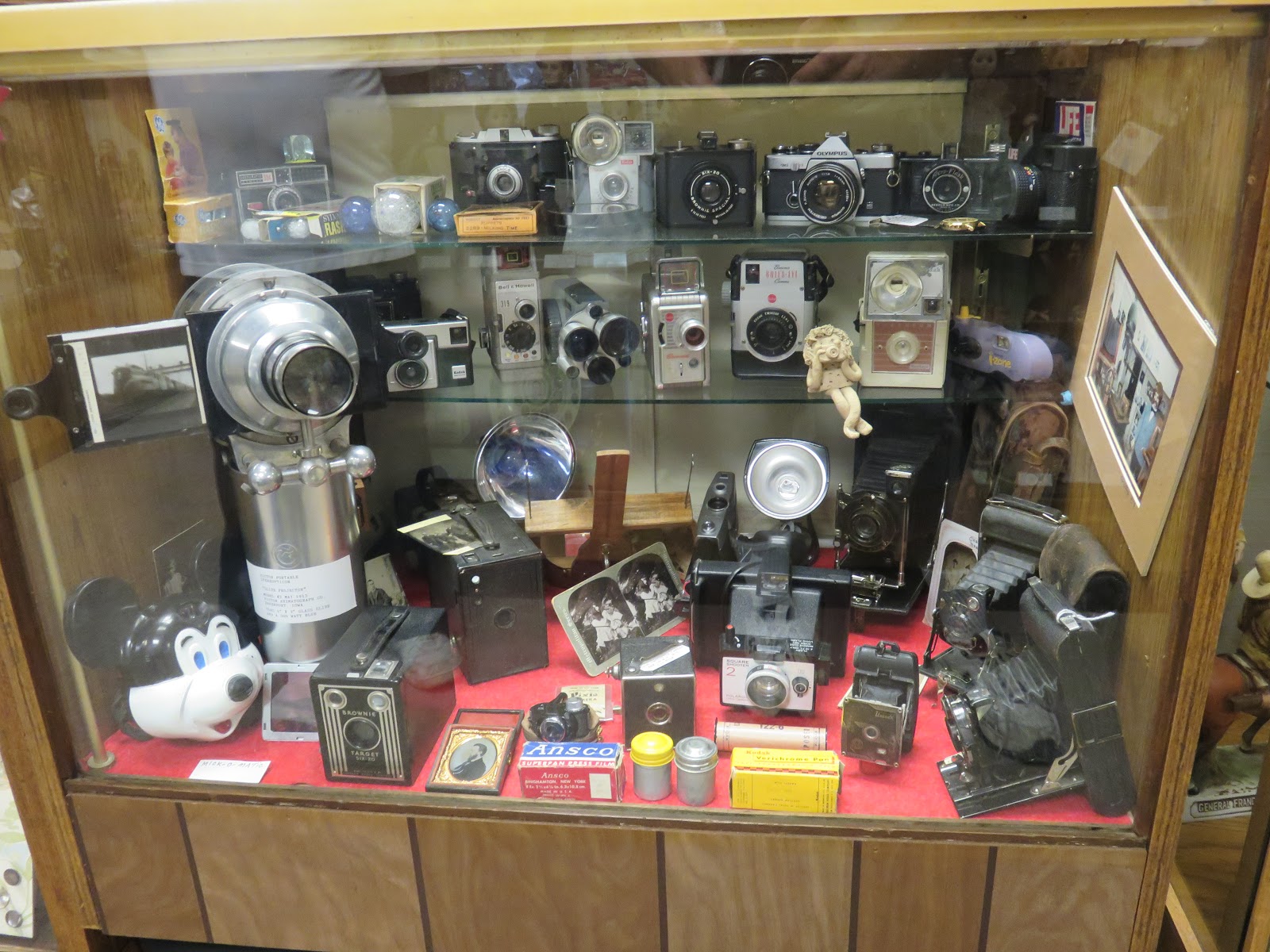
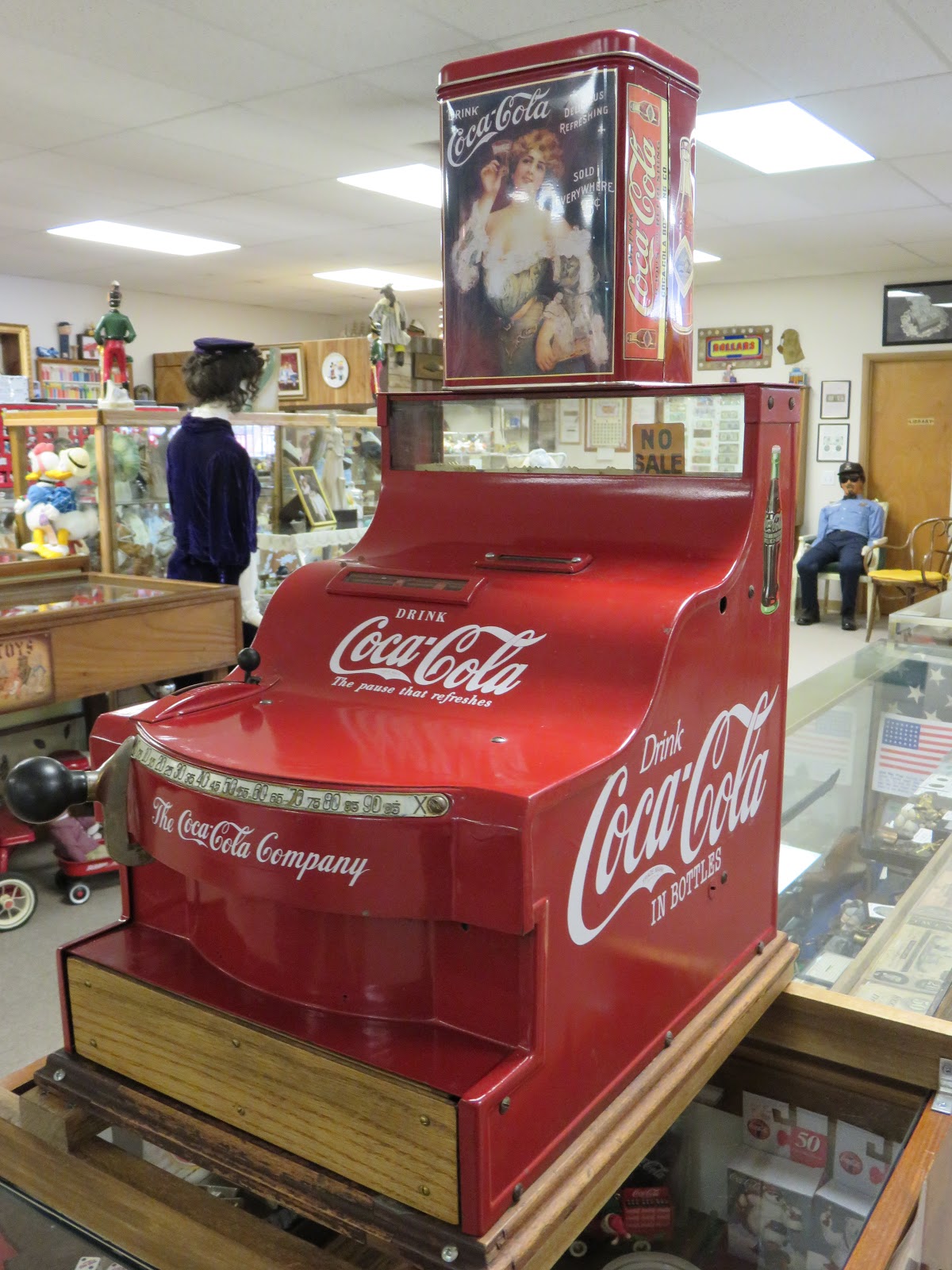
Meet Jim and Nida Gyorfy, curators of the very unique Collectors’ Corner Museum. Located in Idaho Falls, Idaho, it is home to just about every collectible known to mankind: stamps, coins, Beanie Babies, military wear, toy cars, dolls, trains, Peanuts characters, buttons, Coca-Cola memorabilia, and much more. I am greeted warmly by Nida, and, since I’m the only visitor, offered a personal tour by Jim.

“Everything has a story,” Jim says. “There’s a person and a memory connected to it.”

That, in short, defines “collectible” in his eyes.


The first collection I’m shown more closely is an array of Pez dispensers. They have been produced in three countries: Slovakia, Germany, and Hungary. At the top of the case sits a toy gun – a Pez dispenser that had an extremely short shelf life after a consumer was shot in the eye with it.


Cabbage Patch Dolls, which were massively popular in my day, come in various types. A man in Georgia made one for his kid, Coleco came and swooped it up, and the rest is history. They have been made out of nylon, porcelain, and vinyl. The porcelain type was short-lived and designed more for the “serious” collector.


A Japanese doll set impresses as the dolls’ pale skin is composed of oyster shells ground up with paste, and the clothing is meticulous and intricate.

Another doll collection is that of the Madame Alexander First Ladies. Painstakingly faithful, they are modeled after the Presidential First Ladies and the exact look they had on inauguration day. A series was composed of six such dolls, created in order from Mrs. Washington onward. In all, about 38 made it to the market. Women were sent to the Smithsonian to nail down the exact look from dress to makeup to hair.

Perhaps my favorite display is the Matchbox 50th Birthday series of cars. One was made for each state, and it came with a mini-license plate. The car was custom-designed for the state (e.g., California is a classic surfer’s car from the 60’s), and some do not even have a traditional car (Colorado is a snowmobile). They were only issued for one summer, in 2000. You could find them in stores like Target, but they rotated which ones were available. Additionally, six came only in Happy Meals. The result is that the couple did a lot of hunting and bought a lot of Happy Meals…but after three years, they completed the collection (and ironically, Idaho was one of the last).

They also have the first car Matchbox ever issued – a blue steamroller in 1968 – and a coal truck carrying coal all made out of coal.


Their Idaho Centennial collection includes hats, mugs, a commemorative plate, and a gold-plated rifle (one of 1000 made). Jim himself participated in the celebrations, building floats.

The Civil War currency has a back story. The coins used to be melted down to provide more material for the war effort. In their place, paper, or “fractional” currency was issued (for example, there would be a paper bearing 50 cents for a 50 cent coin).


As Jim frequently mentions in one way or another, the collections would not have meaning without the people behind them. The museum has received a large amount of donations, and the Smurf collection is one of them. It was donated by a mother whose daughter died of cancer.

“When the mom saw them on display, she cried,” Jim remarks.

Jim and his wife have been married for over 50 years. They were both collectors before they met, so it’s not surprising this common passion took root the way it did. Once they retired from Tupperware, the museum took shape.

“Collecting was a part of my past, a part of my life. It brought back a fond memory.  A fond memory usually covers up a bad memory.”

The museum opened in 2003. It has been featured on TripAdvisor and RoadsideAmerica, and been driven by word of mouth. There’s a warehouse with more stuff, and he rotates one room with a featured collection (currently it’s war-related).

“I’m very selective now,” he says. “I make a story with the display.”

The Collectors’ Corner Museum is an Idaho homegrown treasure. It will continue on for decades, as the couple’s sons are in line to assume operations when that day comes.


It’s clear the couple has a deep pride and appreciation for their collections and for the community they live in, and the rewards have come back in spades.


More photos from Collectors' Corner Museum:


Friday, September 8, 2017

The Extra-Terrestrial Highway

The Blue Charley Chronicles has moved! Please visit the new site at The Blue Charley Chronicles – Roadside attractions, small towns, museums, and more from the USA

Nevada’s Highway 375, connecting Highways 6 & 93 in the southern half of the state, is known as “The Extra-Terrestrial Highway.” Indeed, you will see aliens on your travels here; real or imagined, it’s your perception.

The first half of the highway is pretty much like the highways on either end – sagebrush country, with mountains in the distance – layers of soft oranges, light greens, navy blues, and cool purples. There is a distinction however: the cows are free range.

The guide at the Tonopah Historic Mining Park had warned me about this, and when I half chuckled she said “No, I’m serious…watch out for the cows.”

When you are driving solo for long periods across desert landscape, your mind has to play games to stay alert. So I imagined alien spaceships descending from the heavens, beaming pools of light onto groups of cows before sucking them up to take them back to their planets.

About halfway through, you come to the first official outpost in the tiny town of Rachel: the Little A’le’Inn motel, bar, and restaurant. Outside, a crane is lifting a large metal spaceship next to the sign which includes an alien head and the moniker “EARTHLINGS WELCOME”.

The building, from a distance, assumes the same look as the surrounding ones: white, one story, blue trim. But this one also has an alien sculpture out front and a variety of art on the walls. Inside, it’s a cornucopia of souvenirs, kitsch, posters, books, and so much more alien-related. There’s also a sea of dollar bills hanging from the ceiling above the bar.


Some customers are dining, some are at the bar, some are surveying the souvenirs, and others are checking in. Clearly, the Inn has capitalized on the UFO theme and taken advantage of the fact that they’re located in really the only civilized area along the highway.

The Extra-Terrestrial Highway came about because of Area 51, a United States Air Force facility whose purpose is clothed in secrecy. Area 51 is believed by some to have harbored alien spacecraft or aliens, is tied to conspiracy theories, and may involve top secret aircraft testing.

I ordered the “Famous Alien Burger” because well, frankly, there wasn’t much to choose from. It arrives as a cheeseburger on a hoagie, basically, and there is nothing memorable about the dish itself. But that’s okay, because there are no better options for miles and I can say I ate there – near where an alien peeks out a window, in a room which features a kind of wall of fame of UFO sightings, underneath a mass of dollar bills all decorated in permanent marker by patrons past.

When I check out, there’s only one waitress afoot. I try to start up a conversation. “Every day I can’t believe how many people come through here,” she says, adding that she’s never personally seen an alien, but knows people who say they did.

Twenty miles up the road, I stop at what appears to be a transient campsite. Upon closer examination, it includes a black mailbox with a picture of an alien on it, a mannequin head lying on its side, a pile of small rocks and litter, and a very weathered lawn chair.

 
Inside the mailbox are a bunch of letters from people addressed to aliens. Many are in a foreign language. A few people have left their photos. Someone contributed a dollar bill. The messages run the gamut of tone and purpose.

“Dear Aliens,” one reads, “Please erase my student debt 117K and everyone elses [sic] too.”

Another is in French but has one sentence in English, “Ready for abduction.”

Mary Stanton tells about her husband’s interest in UFO matters; he passed away four years ago but Mary invites the aliens to land in their garden and adds, “Maybe he is with you now.”

Audrey writes, “Don’t forget to come once in Belgium to taste our good beers (do you like beers? Every species must taste it once!).”

And there’s the more topical note from an L.A. resident, who states “Please abduct Donald Trump and put him in Uranus.”

Suddenly, I am getting almost weepy. I must leave a note for the aliens! Mine is a bit long-winded but it will do.

My final stop on the highway is the Alien Research Center. This appears to be a huge metal, curved barn. Standing tall and  out front is a giant – and I do mean giant – sheet metal alien. Inside, there is an ordinary man – an older gentleman – who runs the place. You can’t really call it a “Research Center” – it is just a gift shop, though a memorable one at that.

The man has a red face and wispy gray hair. “I’ve lived here since ’68,” he says. When he was a teenager he’d hitchhike up Highway 93, and not see a car for up to 12 hours. “The cops would offer to arrest me so I’d have a warm place to stay.”

Is it hard being so far away from services? I asked.

“It’s a trade-off. Vegas has Popeye’s, Taco Bell, McDonald’s…I don’t want any of it. People that move here want to put in stoplights. There’s not a stoplight in the county, not even one.”

The center has not been open the entire time since its inception or with regularity until recently. “It was desolate,” he says, “but now there’s thousands of people that go through it.”

Soon after this experience, I joined up with Highway 93. At that junction there is a place selling “E.T. Fresh Jerky” with a beautiful mural on the outside. I didn’t have time to stop in, but if I were a fan of jerky I would have anyway.

The Extra-Terrestrial Highway adds a lot of fun to what would otherwise be a rather droll drive through the Nevada desert. If you have even the tiniest interest in UFOs, aliens, or pop culture, you won’t be disappointed. Indeed, they are waiting for you...


*The Letters*


Additional source:

http://www.express.co.uk/news/weird/850270/Area-51-inside-aliens-UFO-US-Air-Force-secret-base


Tuesday, September 5, 2017

The Clown Motel


The Blue Charley Chronicles has moved! Please visit the new site at The Blue Charley Chronicles – Roadside attractions, small towns, museums, and more from the USA


The small town of Tonopah is located on Highway 6 in the southern half of Nevada. Its existence is the result of a silver strike. Population peaked at 10,000 people in the early at 1900’s. More than 100 years later, it is not exactly going strong, as the many vacant and neglected buildings attest. But it is known for a couple of attractions – the Tonopah Historic Mining Park, and the Clown Motel.


There is no mistaking you’ve arrived at the Clown Motel. A colorful sign welcomes you, and at night it’s particularly attractive because of the blinking lights all around it. Below the sign a large wooden clown points to another sign which reads “FREE INTERNET. TRUCKERS [with a thumbs up]. GOOD RATES. PETS OK.”

           
The turquoise walls and white railings are just quirky and weathered enough to feel like an old friend you haven’t met. Each door has a wooden clown attached. The lobby is topped with a huge sign with “CLOWN MOTEL” in bold red letters. My favorite part of the outdoor view, however, may be the wooden clown on a motorcycle over the words “BIKERS WELCOME. SECURE PARKING.”


While the outside is sure to attract attention of the average passerby, it pops even more inside the lobby. Clowns, many of them porcelain, line several shelves on two sides. A couple of tall clowns, including Ronald McDonald, and assorted paraphernalia, such as the clown bookends, also have their places. An old, little TV is on. There are portraits, photos, newspaper clippings, red noses, and smiles everywhere. On one side stands a pair of cabinets with items for sale, and additional knick-knacks are present on the counter and in other spaces of the room. With a thick light brown carpet and a glass-top coffee table added, it is among the homiest of motel lobbies you will ever find.

For a nice price, you get a big, comfy room – mine had two queen beds, a TV, a round table and chairs, and a fridge. A few framed pictures of clowns hang around the room. The friendliness with every employee interaction is an added bonus.

I spoke with Bob, the owner of the Clown Motel. He purchased it 22 years ago. “The Clown Motel has been that from the beginning,” Bob says. The original owners, a brother and sister, built the motel in the mid-1980’s, next to the cemetery where their father was buried. They had a clown collection, and brought them into the motel.

According to Bob, when he bought it there were about 150 clowns; now there are some 600. “People come from San Diego, Seattle, and Salt Lake just to see it and spend the night.”


An appearance on the TV show “Ghost Hunters” a few years ago helped boost attendance. Rumors of paranormal activity and hauntings – in part spurned by the presence of the old cemetery (largely containing souls who perished in the early 20th century from mine disasters or plague) – are abound. Certainly some visitors come out of that interest, while others such as myself just like clowns.

In fact, the large majority of the clowns on display were donated by patrons from around the world. When someone who donated stays, they get the clown back for the duration of their stay – then the clown is returned to the shelf.

Bob, 79, is a lifelong resident of the area. He has eight children and 14 grandchildren, enough for a circus to be sure. He’s put the motel up for sale with a price tag of $900,000. “I was ready to retire, and now I’m ready to re-retire.”

And when he does re-retire, you can be sure the Clown Motel will remain the Clown Motel. He has put a lot of work into it, expanded the collection, and is adamant it retain the theme and charm it has today, going so far as to put conditions in the contract. It’s an institution, after all.


Additional source: https://www.reviewjournal.com/local/local-nevada/for-sale-one-nevada-clown-motel-possibly-haunted-video/